
custom Build
Custom Build
Custom Build
Marine A/C Units with Sea Water-Cooled Condensers
Why Marine Air Conditioning Requires a Specialized Approach
A boat, yacht, or commercial vessel operates in conditions that are very different from those of a residential or commercial building. Unlike a building, a vessel is constantly exposed to vibration, movement, saltwater, high humidity, and changing environmental conditions. In the UAE, marine air-conditioning systems must also operate under intense heat, particularly during the summer months when the Arabian Gulf experiences extremely high temperatures.
The engine room and other enclosed machinery spaces can become exceptionally hot, while passenger cabins, crew areas, and living spaces still require consistent and comfortable cooling. These conditions make conventional residential or commercial air-conditioning systems unsuitable for many marine applications.
This is why vessel owners and operators looking for Marine AC Services in UAE need a cooling solution specifically designed for the marine environment.
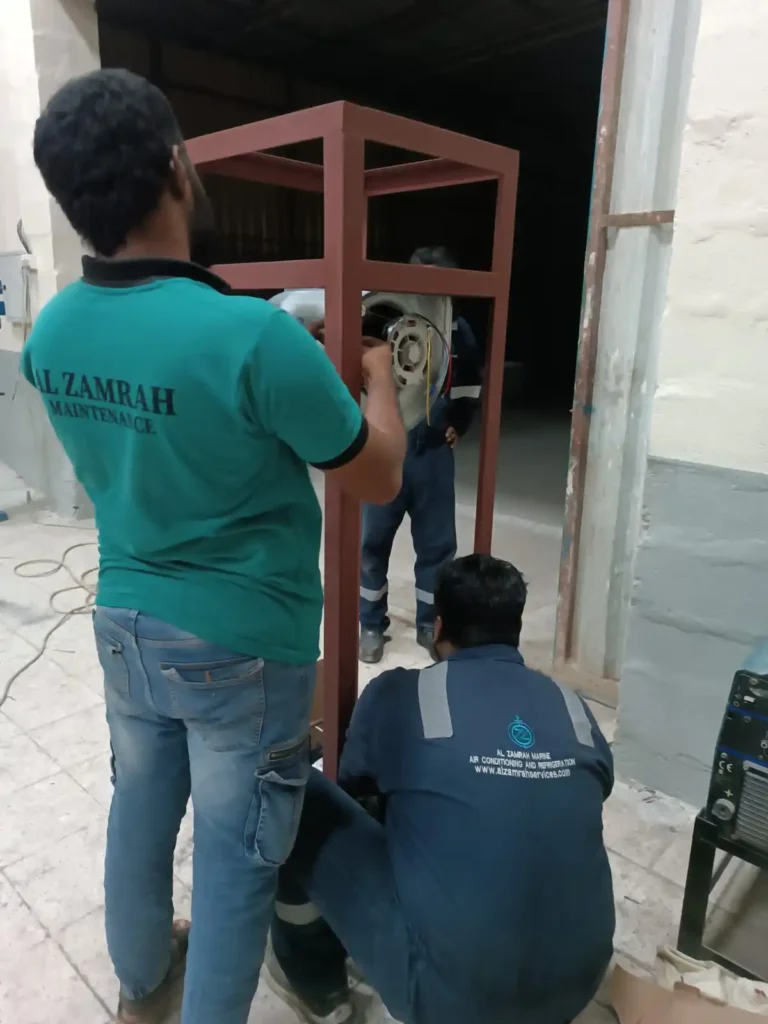
Al Zamrah Maintenance of Air Conditioners, based in Fujairah, UAE, follows a vessel-focused approach to marine HVAC engineering. Instead of adapting a standard land-based air-conditioning system to a boat, the company develops its custom-built marine A/C units around the vessel’s cooling requirements, electrical configuration, available space, and operating environment.
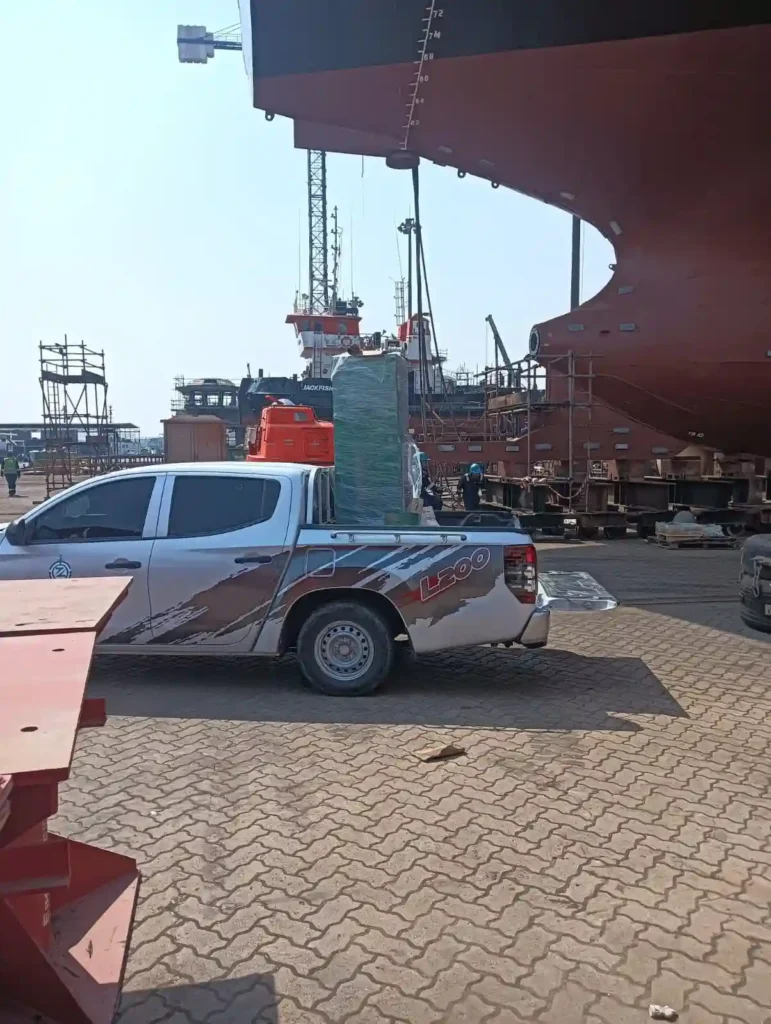
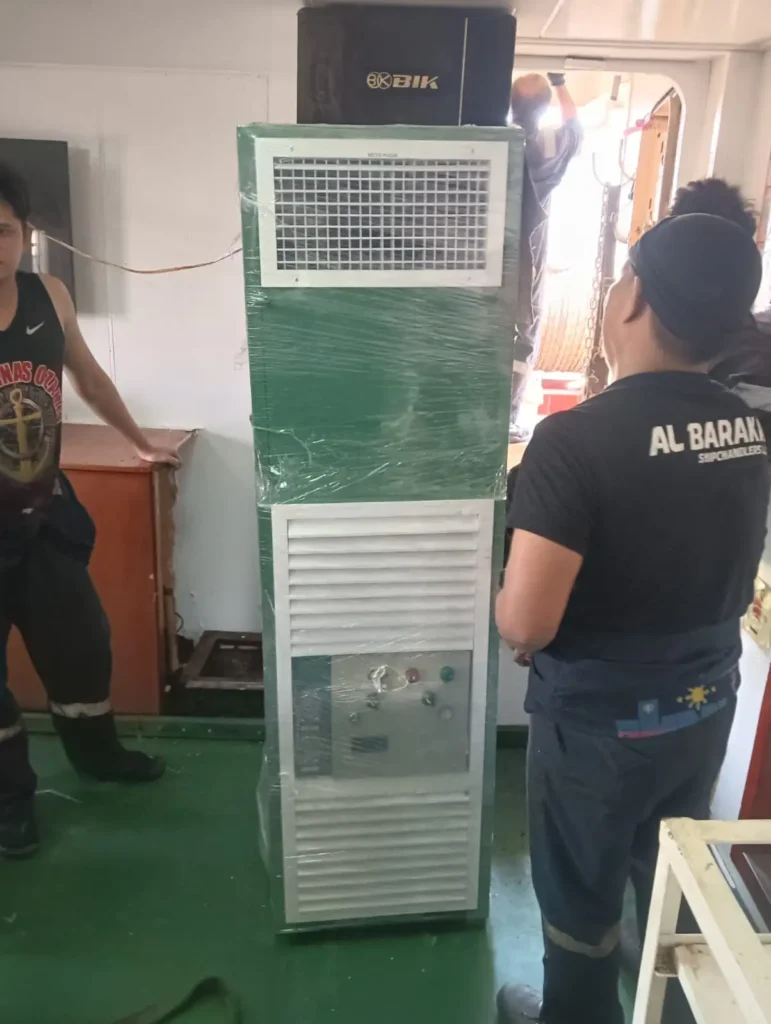
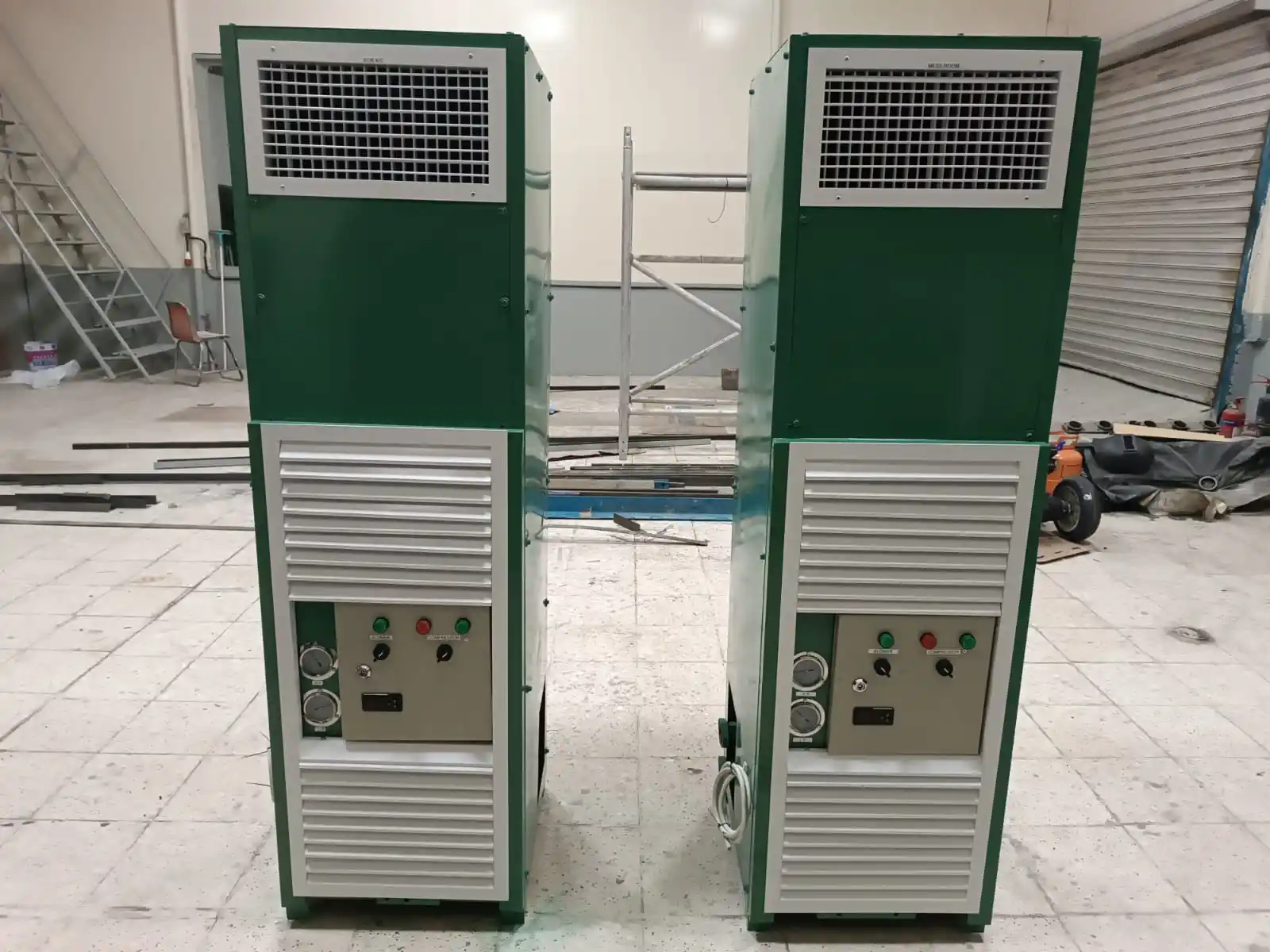
Under the Al Zamrah Cool Pro brand, these marine air-conditioning units use sea water-cooled condensers rather than the air-cooled condensers commonly used in conventional split and package A/C systems.
Because it directly affects how heat is extracted from the refrigeration system, this variation in condenser technology is significant. . It can also affect equipment size, cooling efficiency, operating performance, maintenance requirements, and suitability for vessels operating in the hot and humid UAE marine environment.
The condenser is one of the key components in a refrigeration-based air-conditioning system. Its main function is to remove the heat carried by the refrigerant after the refrigerant has absorbed heat from the conditioned space.
In a conventional residential or commercial air-conditioning system, the condenser normally uses a fan to move ambient air across a condenser coil. The heat from the refrigerant is transferred to the surrounding air and released into the atmosphere.
Marine air conditioning presents a different engineering challenge.
A vessel may have limited machinery space and restricted ventilation around its HVAC equipment. At the same time, the surrounding environment can already be extremely hot. The system must also operate in the presence of salt-laden air, seawater, moisture, vibration, and continuous vessel movement.
A sea water-cooled condenser uses the surrounding seawater as the heat-transfer medium instead of depending entirely on ambient air.
In a typical seawater-cooled marine A/C arrangement, seawater is drawn from outside the hull and circulated through a dedicated water circuit. The seawater passes through a heat exchanger, where it absorbs heat from the refrigerant system. The heated seawater is then discharged back into the surrounding sea.
The basic heat-transfer process can therefore be summarized as:
Seawater intake → water circulation → heat exchanger → heat transfer → seawater discharge
Because water is an effective medium for transferring heat, this configuration allows a marine A/C system to reject heat efficiently while maintaining a relatively compact equipment arrangement.
This can be particularly valuable for vessels operating in the UAE and Arabian Gulf, where both ambient temperatures and seawater temperatures can become very high during summer.
The operating principle is comparable to the raw-water cooling concept used in marine engine cooling systems, although in this application the heat-transfer process is used specifically for marine air conditioning and refrigeration.
Sea water-cooled condenser technology is commonly associated with marine HVAC applications such as:
- Yachts
- Fishing vessels
- Tugboats
- Offshore support vessels
- Commercial boats
- Marine accommodation areas
- Other vessels operating in warm coastal waters
For marine HVAC systems, correct seawater circulation is essential. The seawater intake, pump, heat exchanger, piping, and discharge arrangement must work together to maintain the required heat-transfer performance.
Inside the Al Zamrah Cool Pro Marine A/C Unit
The Al Zamrah Cool Pro marine A/C units are developed as custom-built systems rather than simply taking a standard air-conditioning product and applying it to a marine application.
Each marine cooling system can be configured according to the vessel’s specific technical requirements, including its electrical supply, required cooling capacity, available installation space, and expected operating conditions.
A representative specification for the PAC ALZ 36-350 demonstrates the technical characteristics considered in one of these marine A/C configurations:
- Power Supply: 380–420V / 3-Phase / 50Hz
- Control Voltage: 230V / 1-Phase / 50Hz
- Compressor: Tecumseh FH4538Z-XG
- Locked Rotor Amperage (LRA): 45A
- Rated Load Amperage (RLA): 6.1A
- Evaporator Motor: 220V / 1-Phase / 50Hz, 4-pole
- Cooling Capacity: 360,000 BTU
- Rated Current: 7.9A
- Manufactured in: Fujairah, United Arab Emirates
These specifications provide important information about the electrical configuration, compressor characteristics, evaporator motor, cooling output, and manufacturing location of the system.
Tecumseh Compressor for Marine Cooling Applications
The Tecumseh FH4538Z-XG compressor is specified as part of the PAC ALZ 36-350 marine A/C configuration.
The compressor performs a central function within the refrigeration cycle. It circulates refrigerant through the system while creating the pressure conditions necessary for the refrigeration process to operate.
Compressor selection is especially important in marine HVAC applications because the equipment may operate for extended periods.
A vessel’s air-conditioning system may need to provide cooling while the vessel is:
- Underway
- Anchored
- Docked
- Operating in coastal waters
- Working in high ambient temperatures
- Supporting crew or passenger accommodation
For this reason, the compressor must be considered as part of the complete marine refrigeration system rather than as an isolated component.
The specified electrical characteristics of the Tecumseh compressor include:
- Locked Rotor Amperage (LRA): 45A
- Rated Load Amperage (RLA): 6.1A
The LRA indicates the current associated with the compressor’s locked-rotor or starting condition, while the RLA provides information about its rated operating load.
These values are relevant when assessing the electrical requirements of the marine A/C system and ensuring compatibility with the vessel’s generator and electrical distribution infrastructure.
Understanding the 380–420V Three-Phase Marine Power Supply
The PAC ALZ 36-350 is specified with a 380–420V / 3-Phase / 50Hz power supply.
Electrical compatibility is a fundamental consideration in marine air-conditioning installation. Unlike a residential property, a vessel relies on its own electrical generation and distribution system or an appropriate shore-power connection while docked.
Larger vessels commonly use three-phase electrical distribution for equipment requiring substantial electrical power. A three-phase configuration can therefore be appropriate for larger marine HVAC systems and other heavy-duty onboard equipment.
The unit also specifies:
230V / 1-Phase / 50Hz control voltage
The main power supply and control voltage serve different functions within the equipment.
The higher-voltage three-phase supply supports the primary equipment and compressor-related load, while the separate control voltage is used for the system’s control components.
Before installing a marine A/C unit, the vessel’s electrical system should be assessed for compatibility. Important considerations include:
- Voltage
- Phase
- Frequency
- Generator capacity
- Available electrical load
- Distribution equipment
- Electrical protection
- Shore-power compatibility
Correct electrical matching helps ensure that the marine HVAC equipment can operate safely and reliably within the vessel’s electrical architecture.
360,000 BTU Marine Cooling Capacity
The PAC ALZ 36-350 has a stated cooling capacity of 360,000 BTU.
Cooling capacity describes the amount of heat the air-conditioning system is designed to remove under its specified operating conditions.
A capacity of 360,000 BTU places the referenced configuration within the high-capacity marine air-conditioning category.
Such a cooling output can be relevant to larger marine applications, including:
- Large yachts
- Commercial vessels
- Multi-cabin boats
- Passenger vessels
- Large accommodation areas
- Vessels with substantial internal heat loads
However, selecting a marine A/C system should not be based solely on the physical size of the vessel or a generic BTU figure.
The actual cooling load depends on the heat entering and being generated within the vessel.
Important marine A/C sizing considerations include:
- Overall vessel dimensions
- Cabin dimensions
- Cabin layout
- Number of cabins
- Number of occupants
- Insulation quality
- Window and glass area
- Solar heat gain
- Internal equipment heat
- Machinery heat
- Ventilation requirements
- Ambient temperature
- Seawater temperature
- Desired indoor temperature
- Operating location
- Vessel operating profile
A correct cooling-load assessment helps prevent both undersizing and unnecessary oversizing.
An undersized A/C system may struggle to maintain the required cabin temperature during extreme conditions. An unnecessarily oversized system may increase equipment and operating costs without providing an appropriate improvement in comfort.
This is one of the reasons the custom-built marine A/C approach is important.
Al Zamrah’s marine cooling systems can be configured around the requirements of the vessel instead of applying a single standard A/C capacity to every boat or yacht.
Custom marine air conditioning therefore involves more than selecting a high-capacity unit. It means coordinating the cooling capacity, refrigeration components, electrical configuration, condenser technology, installation space, seawater circuit, and vessel operating conditions into one suitable HVAC solution.
Why UAE Vessel Owners Choose Sea Water-Cooled Marine A/C Systems
Selecting a marine air-conditioning system in the UAE requires consideration of the region’s unique environmental conditions.
The Arabian Gulf is characterized by high summer temperatures, warm seawater, humidity, and strong solar exposure. These factors can increase the cooling demand placed on marine HVAC equipment.
For vessel owners, sea water-cooled systems can provide several practical advantages compared with conventional air-cooled alternatives when correctly designed and maintained.
1. Effective Heat Rejection in High Ambient Temperatures
The UAE can experience summer air temperatures exceeding 45°C.
An air-cooled condenser has to release refrigerant heat into the surrounding atmosphere. When the ambient air is already extremely hot, rejecting additional heat becomes more demanding.
A seawater-cooled condenser uses a dedicated water circuit and heat exchanger instead of relying entirely on hot ambient air.
Although seawater in the UAE is also warm, its temperature profile can be comparatively more stable than the extreme air temperatures experienced during the hottest periods.
When the vessel most needs cooling, this can enable a correctly designed seawater-cooled marine air conditioning system maintain more consistent condenser heat rejection.
For yachts, commercial vessels, and other marine craft operating in the Arabian Gulf, dependable cooling during periods of extreme heat is an important consideration.
2. Compact Marine HVAC Equipment
Vessel space is limited.
Engine rooms and technical compartments have to accommodate numerous systems within a relatively small area. Generators, engines, pumps, electrical panels, fuel systems, piping, and other machinery all compete for available space.
Air-cooled condenser systems typically require adequate airflow and clearance around the condenser. They may also require larger fan arrangements to move air across the condenser coil.
A seawater-cooled condenser does not depend on the same volume of forced ambient airflow for heat rejection.
This can make the equipment arrangement more suitable for restricted marine machinery spaces.
The space saved can potentially be allocated to:
- Other marine machinery
- Electrical equipment
- Storage
- Maintenance access
- Service clearance
- Additional vessel systems
For yachts and compact vessels, efficient use of machinery space is an important part of HVAC planning.
3. Reduced Noise From Condenser Fans
Noise control can be particularly important on yachts, passenger vessels, and crew accommodation areas.
Air-cooled condensers use fans to move air across the condenser coil. These fans contribute to the system’s operating sound and can also contribute to mechanical vibration.
A seawater-cooled marine A/C system relies on the seawater circuit for the primary condenser heat-transfer process and therefore generally has less dependence on large condenser fans.
This can contribute to a quieter environment in areas such as:
- Yacht cabins
- Guest rooms
- Crew quarters
- Sleeping areas
- Passenger accommodation
The actual noise level of the complete HVAC installation will still depend on the compressor, pump, mounting system, piping, insulation, and other equipment.
However, when onboard comfort and noise control are top concerns, minimizing the requirement for huge condenser fans might be advantageous.
4. Marine Corrosion Protection for Saltwater Exposure
Saltwater corrosion is one of the most important considerations when designing and maintaining a seawater-cooled marine HVAC system.
Components directly exposed to seawater can include:
- Seawater pumps
- Sea strainers
- Heat exchangers
- Valves
- Fittings
- Piping
- Through-hull components
These components require appropriate materials and protection for the marine environment.
Depending on the application, marine cooling systems may use materials such as:
- Cupronickel
- Bronze
- Marine-grade stainless steel
Material selection alone, however, is not enough.
Marine HVAC engineering must also consider:
- Galvanic corrosion
- Biofouling
- Marine growth
- Sediment
- Scale formation
- Seawater intake design
- Through-hull fittings
- Water-flow restrictions
The sea strainer and seawater intake must be properly selected and positioned to support reliable water circulation.
A contractor with general residential or commercial HVAC experience may understand refrigeration technology but may not have sufficient experience with raw-water systems, marine corrosion, galvanic interaction, or underwater fittings.
Marine HVAC therefore requires knowledge of both refrigeration engineering and marine system conditions.
Al Zamrah’s focus on marine A/C applications in the UAE is supported by its Fujairah location, which puts it close to a well-established maritime environment.
5. Long-Term Marine A/C Cost Efficiency
The initial cost of a seawater-cooled marine air conditioning system could be higher than that of a traditional air-cooled system. .
However, purchase price alone does not determine the overall cost of an HVAC system.
The long-term cost of a marine A/C system can be influenced by:
- Energy consumption
- Cooling performance
- Equipment durability
- Maintenance requirements
- Operating hours
- Component service life
- Frequency of breakdowns
When correctly sized, professionally installed, and regularly maintained, a seawater-cooled system can provide long-term operating benefits.
For vessel owners, the more useful consideration is therefore the total cost of ownership, rather than simply the initial purchase price.
The objective is to select a marine HVAC system that can provide reliable cooling, appropriate energy performance, and practical serviceability throughout the vessel’s operating life.
Marine Automation Services
Electrical Panel Rewiring & Enhancements
We carry out complete rewiring and modification of onboard electrical panels to improve system reliability and operational safety.
Control Panel Diagnostics & Modernization
Our team diagnoses control faults and upgrades outdated panels to enhance monitoring accuracy and system responsiveness.
Sensors, Actuators & Control Devices
We integrate modern automation components that enable precise regulation of HVAC and refrigeration systems.
Automation Retrofitting & Lifecycle Support
Our Marine Automation Services include upgrading legacy installations with contemporary automation solutions to improve efficiency and extend system lifespan.
Marine AC Services in Fujairah
Fujairah is an important maritime and bunkering location in the UAE. Positioned along the Gulf of Oman and outside the Strait of Hormuz, it supports substantial marine activity involving commercial shipping, offshore operations, fishing vessels, workboats, and private yachts.
This creates a strong local requirement for specialized Marine AC Services in Fujairah.
Vessels operating from or around Fujairah may require marine HVAC installation, troubleshooting, repairs, preventive maintenance, compressor servicing, seawater pump inspection, condenser cleaning, and other air-conditioning services.
For a marine HVAC provider, local presence can provide an important practical advantage.
A locally based service provider can potentially respond more quickly when a vessel experiences an unexpected cooling problem.
For example, a vessel may experience:
- Compressor failure
- Seawater pump problems
- Blocked sea strainer
- Restricted seawater circulation
- Heat-exchanger fouling
- Electrical faults
- Loss of cooling performance
When a vessel is preparing for a charter or scheduled voyage, minimizing downtime can be particularly important.
Being close to vessels operating from Fujairah Port and nearby marine facilities can make access, inspection, troubleshooting, and service more practical.
For marine operations, proximity is not simply about convenience. Timely access to specialized marine HVAC support can help reduce operational delays.
What Does Custom-Built Marine A/C Really Mean?
The term marine air conditioning does not automatically mean that a system has been engineered specifically for marine use.
Some systems may involve conventional residential split A/C equipment being installed in a boat with limited modification.
An evaluation of the vessel and its operating needs is the first step in creating a really custom-built marine air conditioning system. .
Several factors need to be considered before determining the appropriate equipment configuration.
Cabin Layout and Insulation
The internal arrangement of a vessel directly affects the cooling load.
Cabin dimensions, insulation, windows, glazing, occupancy, and solar exposure all influence the amount of heat that the HVAC system needs to remove.
Instead of relying only on generic BTU-per-square-foot calculations, a marine cooling design should consider the actual characteristics of the vessel.
Available Electrical Supply
The marine A/C system must be compatible with the vessel’s electrical infrastructure.
This includes matching the equipment to:
- Voltage
- Phase
- Frequency
- Generator capacity
- Available electrical load
- Shore-power supply
Electrical compatibility is essential for reliable marine HVAC operation.
Seawater Intake Location
The seawater intake plays an important role in the performance of a water-cooled marine A/C system.
The intake, sea strainer, and seawater pump should be positioned appropriately to help minimize problems associated with:
- Air ingestion
- Sediment
- Marine growth
- Debris
- Restricted water flow
A properly designed raw-water circuit supports consistent heat transfer and helps protect the marine condenser.
Compressor Selection
Compressor selection should correspond with the vessel’s cooling requirements and expected operating profile.
Marine HVAC equipment may operate for extended periods, particularly on commercial vessels and vessels operating in hot climates.
The compressor should therefore be appropriate for the required duty cycle rather than selected solely on the basis of nominal cooling capacity.
Corrosion Protection
Marine equipment can remain exposed to saltwater, humidity, and salt-laden air for long periods.
Components exposed to seawater should therefore be selected with appropriate corrosion resistance and marine compatibility in mind.
These considerations are what differentiate a purpose-designed custom marine A/C system from a conventional land-based air-conditioning unit simply installed inside a boat.
Marine A/C Installation, Maintenance, and Service Life
A seawater-cooled marine A/C system requires maintenance practices that are different from those normally associated with residential air conditioning.
The refrigeration system is only one part of the complete marine HVAC installation. The Due to its constant exposure to the maritime environment, the seawater circuit also needs to be maintained.
Proper maintenance can help preserve cooling performance, identify developing problems, and support longer equipment service life.
Cleaning the Sea Strainer
The sea strainer helps prevent debris, marine growth, and other materials from entering the seawater cooling circuit.
As marine debris accumulates, the strainer can become restricted.
Reduced seawater flow can affect the heat exchanger and condenser performance.
Regular inspection and cleaning of the sea strainer are therefore important parts of marine A/C maintenance.
Inspecting the Marine Heat Exchanger
The heat exchanger is responsible for transferring heat between the refrigeration system and the seawater circuit.
Over time, scale, mineral deposits, marine growth, fouling, and corrosion can affect the heat-transfer surfaces.
This is particularly relevant for vessels operating in Gulf waters.
If heat-exchanger surfaces become heavily fouled, the system may experience reduced heat-transfer efficiency and may have to work harder to provide the required cooling.
Checking the Raw-Water Pump
The seawater pump maintains the flow required through the marine cooling circuit.
Its impeller should be inspected periodically for:
- Wear
- Cracking
- Damage
- Deterioration
- Reduced pumping performance
A damaged or worn impeller can reduce seawater circulation and negatively affect condenser heat rejection.
Monitoring Refrigerant and Electrical Components
Marine A/C servicing should also include inspection of the refrigeration and electrical systems.
Important checks can include:
- Refrigerant condition and charge
- Compressor operation
- Electrical connections
- Wiring
- Terminals
- Control components
- Corrosion
- System operating performance
Because vessels are exposed to humidity and salt-laden environments, electrical corrosion requires particular attention.
Checking Zinc Anodes
Where zinc anodes are installed as part of the vessel’s corrosion-protection system, their condition should be checked periodically.
Zinc anodes can provide galvanic protection for compatible underwater and seawater-exposed components.
The condition of the anode should be monitored and replaced when its protective material has been sufficiently consumed.
Scheduled Marine A/C Maintenance by Al Zamrah
Even a carefully engineered marine A/C system requires preventive maintenance.
Seawater exposure, marine growth, mineral deposits, corrosion, pump wear, and long operating periods can gradually affect the performance of a water-cooled marine HVAC system.
For this reason, Al Zamrah Maintenance Services offers scheduled maintenance contracts for marine A/C systems.
Planned servicing allows critical components to be inspected before relatively small problems develop into major cooling failures.
A preventive maintenance program can focus on the seawater circuit, refrigeration system, electrical components, condenser, heat exchanger, pump, strainer, and other essential marine HVAC equipment.
For vessel owners operating in the UAE, combining custom marine A/C engineering with scheduled marine HVAC maintenance provides a practical approach to maintaining system reliability and supporting the long-term service life of the equipment.
Frequently Asked Questions About Sea Water-Cooled Marine A/C Systems
What is the main advantage of a sea water-cooled marine A/C system over an air-cooled unit?
The main advantage is the method used to reject heat. A sea water-cooled marine A/C system transfers heat from the refrigeration circuit into seawater instead of relying primarily on already-hot ambient air.
This can be particularly useful in the UAE, where summer air temperatures can become extremely high. A properly designed water-cooled marine A/C system can provide consistent heat-rejection performance while also allowing a more compact equipment arrangement and reducing reliance on large condenser fans.
Can Al Zamrah build a custom marine A/C unit for different vessel sizes?
Yes. Al Zamrah Cool Pro marine A/C units can be configured according to the requirements of the vessel.
Factors considered can include:
- Vessel size
- Cabin layout
- Insulation
- Cooling load
- Electrical supply
- Available installation space
- Operating environment
This custom approach can support applications ranging from smaller pleasure craft and yachts to larger commercial and passenger vessels.
How often should a sea water-cooled marine A/C system be serviced?
Maintenance frequency depends on vessel usage, seawater conditions, operating hours, and the environment in which the vessel operates.
Sea strainers and raw-water pump components should generally be inspected periodically, with a more comprehensive marine A/C service recommended at least once or twice a year.
Vessels operating continuously or under demanding conditions may require more frequent inspection.
Routine maintenance should include the seawater intake, sea strainer, pump, heat exchanger, refrigerant circuit, electrical connections, and other important marine HVAC components.
Are Marine AC Services in Fujairah different from general HVAC services?
Yes.
Marine HVAC systems must account for conditions that are not normally present in standard building air-conditioning applications.
These include:
- Saltwater corrosion
- Seawater circulation
- Vessel vibration
- Marine electrical systems
- Restricted machinery space
- Through-hull fittings
- Marine growth
- Raw-water pumps
- Heat exchangers
Specialized Marine AC Services in Fujairah therefore require knowledge of both air-conditioning technology and marine operating conditions.
What compressor brand does Al Zamrah Cool Pro use?
The referenced Al Zamrah Cool Pro PAC ALZ 36-350 configuration uses a Tecumseh FH4538Z-XG compressor.
The compressor specification includes a 45A Locked Rotor Amperage (LRA) and a 6.1A Rated Load Amperage (RLA).
Compressor selection for marine HVAC applications should consider the cooling capacity, electrical requirements, refrigeration circuit, expected operating conditions, and duty cycle of the vessel.
Final Thoughts: Custom Marine Air Conditioning for UAE Vessels
Reliable cooling onboard a vessel requires a different approach from conventional building air conditioning.
Boats, yachts, commercial vessels, fishing vessels, and offshore craft operate in environments where high temperatures, seawater, humidity, vibration, restricted equipment space, and vessel-specific electrical systems can all influence HVAC performance.
For vessels operating in the UAE, these conditions become especially important during the extreme summer months.
A properly engineered marine A/C system should therefore be designed around the vessel rather than selected solely from a standard residential or commercial HVAC product range.
The cooling capacity, compressor, electrical supply, seawater intake, heat exchanger, condenser configuration, equipment location, corrosion protection, and maintenance requirements all need to work together as part of a complete marine HVAC solution.
Al Zamrah Maintenance of Air Conditioners, based in Fujairah, provides custom-built Al Zamrah Cool Pro marine A/C units incorporating sea water-cooled condenser technology.
The PAC ALZ 36-350 example demonstrates a high-capacity marine configuration with a stated 360,000 BTU cooling capacity, 380–420V three-phase power supply, 230V single-phase control voltage, Tecumseh FH4538Z-XG compressor, and manufacturing location in Fujairah, United Arab Emirates.
The benefit of a custom marine A/C approach is that the system can be considered in relation to the actual vessel. Instead of treating every yacht, boat, or commercial vessel as if it has the same requirements, the cooling solution can take into account vessel dimensions, cabin layout, insulation, electrical infrastructure, operating conditions, seawater circulation, and required cooling output.
For vessel owners searching for custom marine A/C units in UAE, marine air conditioning in Fujairah, sea water-cooled condenser systems, marine HVAC installation, or Marine AC Services in UAE, this vessel-specific approach offers a specialized alternative to conventional land-based air conditioning.
A marine A/C system should also be viewed as a long-term investment rather than simply a cooling appliance. Proper installation, regular sea strainer cleaning, heat-exchanger inspection, seawater pump maintenance, electrical checks, refrigerant monitoring, corrosion protection, and scheduled professional servicing can all contribute to reliable operation and longer equipment life.
Ultimately, the most suitable marine air-conditioning system is not necessarily the largest or most expensive unit. It is the system that is correctly matched to the vessel’s cooling load, electrical system, seawater conditions, available space, operating environment, and maintenance requirements.
For vessels operating in the demanding climate of the UAE and Arabian Gulf, a properly engineered sea water-cooled marine A/C system can provide a practical and dependable approach to onboard climate control.